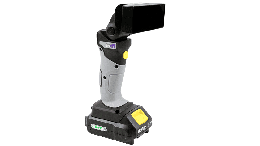
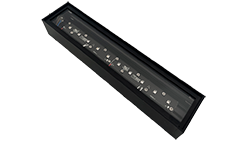
Non-destructive testing
Principle -
Dye penetrant testing (PT or LPI) : method based on penetrant application on materials to check flaws and defects on its surface. Adapted penetrant is applied (by spraying or dipping) on the material, then after removal of the excess, a developer is added to highlight the penetrant out of the flaws. These defects are detected by fluorescence with inspection mainly done with UV light at 365nm wavelength.
Magnetic particle inspection (MT or MPI) : technique that involves creating a magnetic flux inside a ferromagnetic material to highlight potential discontinuities or cracks on its surface. When a defect is present in its path, this magnetic flux is deflected and creates a leak which, by attracting the fluorescent particles of a revealing product, provides a particular signature characteristic of the defect. UV light at 365nm wavelength is then used to examine and detect these particles.
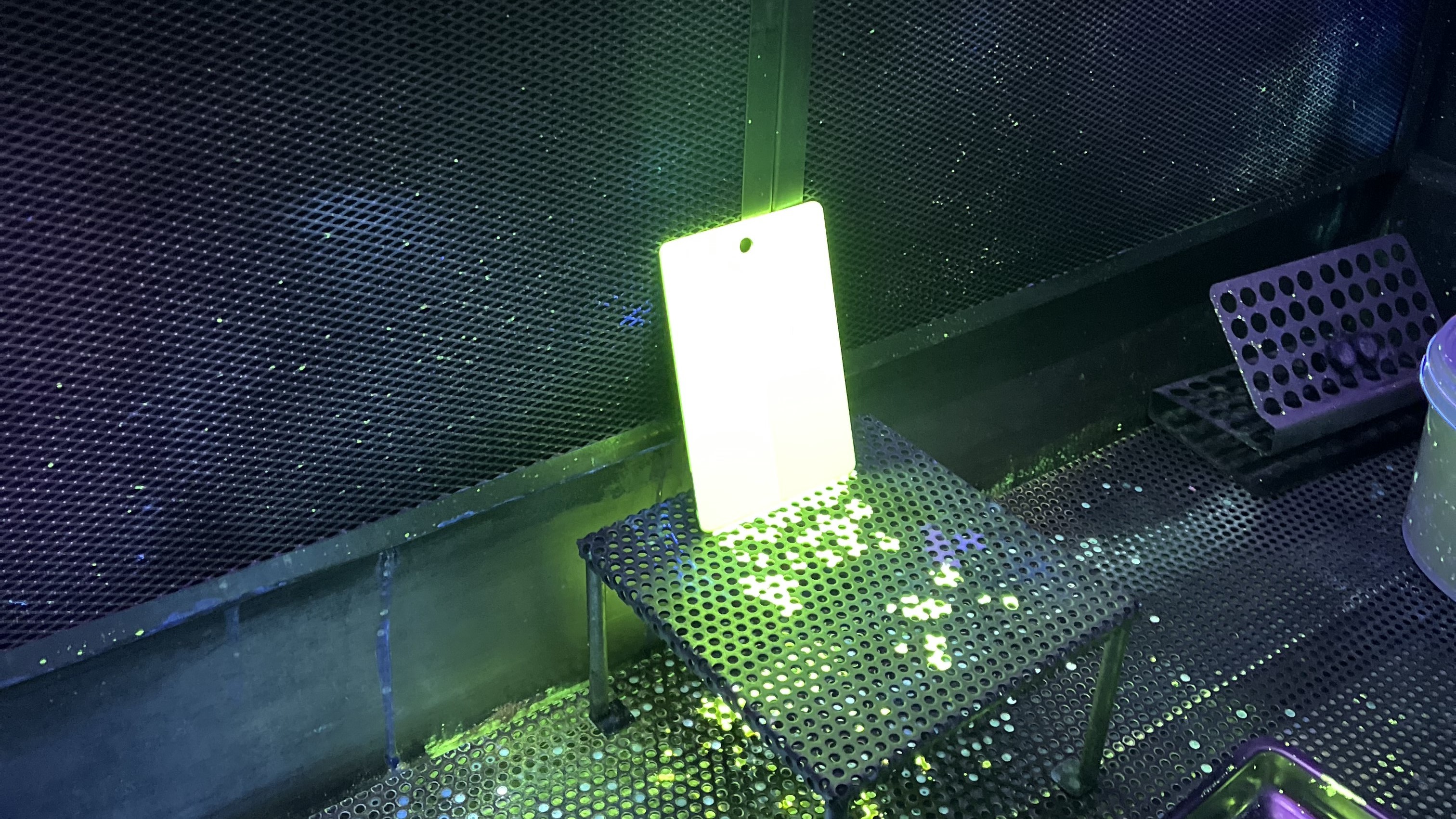
- Application in many industrial fields -
Non-destructive testing for the aerospace industry and the safety of critical components
In the aeronautics industry, non-destructive testing (NDT) is essential for ensuring the safety, reliability, and compliance of components throughout their lifecycle, from manufacturing to maintenance operations and periodic inspections. These inspection techniques enable the accurate detection of hidden defects such as cracks, porosity, inclusions, and delaminations in metallic and composite materials. Used on fuselages, wings, landing gear, turbines, and other critical components, they help prevent failures and maintain the highest standards of aviation safety.
Non-destructive inspections for aerospace applications and space missions
In the aerospace sector, mechanical and environmental stresses are extreme. Materials must withstand vibrations, significant temperature variations, and the conditions of the vacuum of space. Non-destructive testing in aerospace is essential for verifying the integrity of satellites, launch vehicles, rocket engines, and complex structures. These inspections ensure that no structural defect will compromise a mission.
Non-destructive testing for the energy industry
In the energy sector, infrastructure is exposed to harsh conditions, including high pressure, corrosion, extreme temperatures, and material aging. Non-destructive testing methods are used to inspect pipelines, boilers, pressure vessels, wind turbines, and power plants. They help improve the safety of energy facilities, prevent incidents, and optimize predictive maintenance strategies.
Non-destructive testing for quality assurance and safety in the automotive industry
In the automotive industry, non-destructive testing (NDT) is an essential tool for ensuring the quality, safety, and reliability of vehicles throughout the manufacturing and development process. These inspection techniques make it possible to verify the integrity of welds, engine parts, chassis structures, and safety components without damaging the materials. By detecting manufacturing defects and structural anomalies at an early stage, non-destructive testing helps improve vehicle performance, reduce production costs, and enhance user safety.
New idea/project?
Feel free to visit our page dedicated to custom solutions to learn more, or contact us directly to discuss your project.